
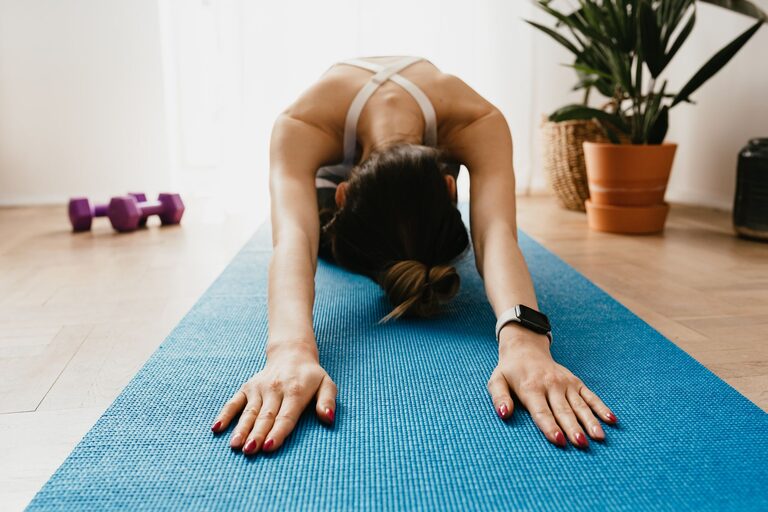
Stretching is a simple way to add movement to your day. It can help you feel less stiff, move more comfortably, and become more aware of how your body feels. You do not need a gym, special equipment, or a large space to get started. A few minutes at home can be enough.
For beginners, the most important goals are consistency, comfort, and good technique. Stretching should feel gentle and controlled, not painful. This guide explains how to build a safe home routine and includes simple stretches for different areas of the body.
What Is Stretching?
Stretching involves moving a muscle or joint through a comfortable range of motion. Some stretches are held in one position, while others use slow, controlled movement.
The two most common types are:
– Static stretching: Holding a position for a set amount of time.
– Dynamic stretching: Moving gently through a range of motion without holding one position for long.
Static stretching is often useful after light activity or as part of a relaxed flexibility routine. Dynamic stretching can be helpful before exercise because it gradually prepares your body for movement.
Benefits of Stretching at Home
A regular stretching habit may help you:
– Move more freely during everyday activities
– Reduce feelings of stiffness after sitting
– Improve body awareness
– Prepare your muscles for exercise
– Relax after a busy day
– Support better posture and movement habits
Stretching is not a quick fix, and progress may be gradual. The key is to practice regularly rather than force deep positions. Even five to ten minutes several times a week can become a useful part of your routine.
How to Prepare for Stretching
You can stretch in a living room, bedroom, or any clear area where you have enough space to move safely. A yoga mat, carpet, or folded towel can make floor-based stretches more comfortable, but these items are optional.
Before you begin:
- Choose a clean, uncluttered space.
- Wear comfortable clothing that allows movement.
- Avoid stretching immediately after sitting still for a long time.
- Start with gentle movement for a few minutes.
- Breathe slowly and naturally throughout the routine.
A short warm-up can include walking around the room, marching in place, rolling your shoulders, or gently moving your arms. The purpose is to ease your body into activity, not to tire yourself out.
Beginner-Friendly Stretches
Neck and Shoulder Stretch
This stretch can be useful after reading, working, or using a computer.
- Sit or stand tall with your shoulders relaxed.
- Slowly tilt your right ear toward your right shoulder.
- Keep your left shoulder down and avoid lifting it.
- Hold for 15 to 20 seconds.
- Return to the starting position and repeat on the other side.
Next, gently roll both shoulders backward several times. Keep the movement smooth rather than making large or fast circles.
Chest Stretch
A chest stretch can open the front of your upper body after time spent sitting.
- Stand near a doorway or place your hands behind your back.
- If using a doorway, rest your forearms lightly against the frame.
- Step forward slowly until you feel a gentle stretch across your chest.
- Keep your ribs relaxed and avoid arching your lower back.
- Hold for 15 to 30 seconds.
Keep the stretch mild. You should not feel pressure in your shoulders or joints.
Upper Back Stretch
This movement targets the area between your shoulder blades.
- Extend both arms in front of you.
- Interlace your fingers or place one hand over the other.
- Gently reach forward as you allow your upper back to round slightly.
- Let your head remain comfortable rather than dropping it forcefully.
- Hold for 15 to 30 seconds while breathing slowly.
You may feel a broad stretch across your upper back.
Standing Side Stretch
This simple stretch involves the sides of your torso.
- Stand with your feet about hip-width apart.
- Raise your right arm overhead.
- Slowly lean to the left without twisting your body.
- Keep both feet grounded and your shoulders relaxed.
- Hold for 15 to 20 seconds, then switch sides.
Move only as far as you can while keeping your balance and breathing comfortably.
Hamstring Stretch
The hamstrings are located along the backs of your thighs.
- Sit near the front of a sturdy chair.
- Extend one leg forward with your heel on the floor.
- Keep your back relatively straight and hinge forward slightly from your hips.
- Stop when you feel a gentle stretch behind your thigh.
- Hold for 15 to 30 seconds, then switch legs.
Avoid rounding your back or reaching aggressively toward your toes. The stretch should come from a small, comfortable movement.
Quadriceps Stretch
The quadriceps are the muscles at the fronts of your thighs.
- Stand near a wall or chair for balance.
- Bend your right knee and bring your heel gently toward your seat.
- Hold your ankle or the lower part of your pant leg.
- Keep your knees close together and your torso upright.
- Hold for 15 to 30 seconds, then change sides.
If you cannot comfortably reach your foot, skip this stretch or use a strap only if you know how to use it safely. Never pull forcefully.
Calf Stretch
This stretch targets the back of your lower leg.
- Face a wall and place both hands against it.
- Step one foot back and keep that heel on the floor.
- Bend your front knee while keeping the back leg comfortably straight.
- Lean toward the wall until you feel a stretch in the back calf.
- Hold for 15 to 30 seconds, then switch sides.
Keep your back heel pointed generally toward the floor and your toes facing forward.
A Simple Ten-Minute Routine
Try this sequence when you want a short full-body session:
- March gently in place for two minutes.
- Perform shoulder rolls and neck tilts for one minute.
- Hold the chest stretch for 20 seconds.
- Hold the upper back stretch for 20 seconds.
- Perform the standing side stretch on both sides.
- Hold the hamstring stretch on each leg.
- Hold the quadriceps stretch on each leg.
- Finish with the calf stretch on each leg.
- Take a few slow breaths before standing or returning to your activities.
You can repeat a stretch once if it feels comfortable. There is no need to rush through the routine or hold each position for a long time.
Common Beginner Mistakes
Avoid these common habits:
– Bouncing: Use steady movements instead of quick, bouncing motions.
– Holding your breath: Relax your jaw and breathe normally.
– Forcing a deep stretch: More intensity does not always mean better results.
– Ignoring alignment: Keep your knees, feet, and spine in comfortable positions.
– Stretching through pain: Sharp, burning, or sudden pain is a signal to stop.
– Trying to copy advanced poses: Choose movements that match your current ability.
A stretch should feel noticeable but manageable. If a movement causes pain, dizziness, numbness, or unusual discomfort, stop and give yourself time to recover. If you have an injury or a condition that affects movement, ask a qualified professional for guidance before starting a new routine.
How to Build a Lasting Habit
The easiest way to stay consistent is to connect stretching with something you already do. You might stretch after waking up, during a work break, after a walk, or before getting ready for bed.
Keep your first sessions short and simple. Set a timer for five minutes if needed. As the routine becomes familiar, you can gradually add more movements or extra time. Focus on how your body feels and on using controlled, comfortable motion.
Stretching at home does not need to be complicated. With a clear space, steady breathing, and a few beginner-friendly movements, you can create a routine that fits naturally into your day. Start gently, practice regularly, and let your flexibility improve at its own pace.